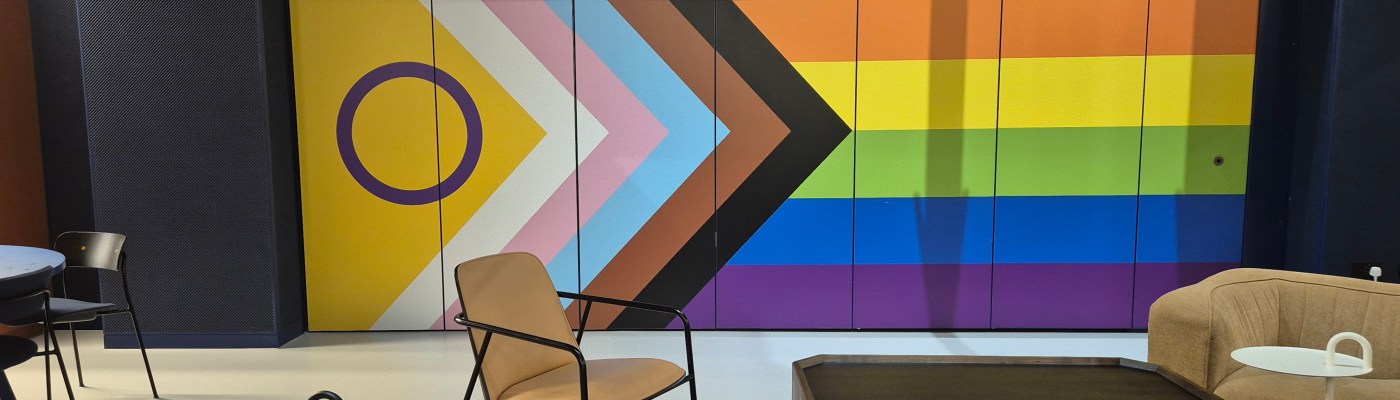
This September I presented a workshop at the awesome Rainbow Therapists Conference in Glasgow on Queering menopause. It was a many titled workshop, provisionally at one point even called “what even is this fuckery” To me queer as a verb is vitally important, it is not just, or merely, an identity label but an active way of looking at and engaging with the world. It is a lens through which we understand our experiences, as well as a frame for those experiences. This isn’t quite an essay, but is an expansion on some of the notes I made for the workshop,
When it comes to menopause the lack of any frame other than the most normative, white, patriarchal one has been profoundly shocking to me, one of the reasons I was so excited to be giving the workshop. Most people experiencing menopause symptoms are unaware that the term “menopause” originated in France in the 19th century. Before that aging was not gendered in the profound way it is now. In the 19th century medical literature depicted women as controlled by their reproductive systems, with mental illness linked to life cycle events like puberty and menopause, which were seen as periods of vulnerability. Menopause was pathologized, viewed as a catastrophic event with diagnoses such as climacteric insanity suggesting a decline in mental health due to ovarian function cessation. This framing devalued older women, marking them as useless once they could no longer reproduce, and reinforced the need for medical intervention. These interventions were often horifically surgical. Other prescribed cures for the newly named menopause, such as Silas Weir Mitchell’s “Rest Cure,” restricted women to enforced bed rest and prohibited intellectual engagement, aiming to keep them within traditional domestic roles. Lifestyle interventions for menopausal women discouraged social and intellectual activities, controlling their behavior. The way to have a good menopause was to have produced children, and lived a virtuous life, medical diagnosis was intrinsically tied up with moral judgement.
The term biopsychosocial provides a vital lens through which to understand the complex, multifaceted journey of what we now call menopause. While often framed through a cisgender, heteronormative perspective, menopause is a deeply personal and often non-linear transition that intersects with and is uniquely shaped by queer identities. The historical pathologization of menopause, rooted in Enlightenment-era views of women’s bodies and societal roles, has created a narrative of decline and medical abnormality. For us as queer individuals, this narrative clashes with the lived reality of constructed identities that have long existed outside of and challenged traditional gendered expectations.
Menopause is not a monolith; its experience is a complex interplay of biology, psychology, and social context. For queer individuals, these three pillars are often at odds with a system built for cisgender, heterosexual women. The system however also seems to be failing those cisgender, heterosexual women. Taboo, secrecy, myths and fears abound, even with good work starting to be done. To be privileged is to be unchanging, and we are confronted as we age, and our hormone profiles change (for all genders) with the inevitability of change, a privilege is lost, and yet as a society we seem to wish to pretend this simply does not happen, or if it happens that we will not talk about it.
The biopsychosocial impact of the changes we put under the umbrella term menopause can be profound, and in many ways distinctly queer. The body no longer aligns, the individual is moved into the “other” with all that entails, the choices of life path are curtailed. Whilst of course this is not everyone’s experience it is part of the experience for some.
The societal framing of menopause is overwhelmingly gendered, leading to gendered services and “gendered narratives even as age degenders, The originators of the term called the menopause “the death of sex” as if femininity and youthfulness were the markers, and the only markers of womanhood. At the same time, some people may find this liberating, or a belief.
None of this is binary. It is a fluid, changing experience, not “the change” as aunties whispered about but “changes” which ebb and flow.
However, clinging to the idea that to be cis het and white means to be never changing even those services, narratives and support we do have around menopause are not only gendered but very narrow . The historical pathologization of menopause as a state of climacteric insanity and uselessness for older women further alienates queer individuals who already face ageism, homophobia, and transphobia. I developed the concept of “non-consensual womaning” to highlight the lack of choice many queer individuals feel when navigating menopause. Services, support groups, and even hormone treatments are often designed exclusively for cisgender women, forcing individuals to either conform to a narrative that does not fit or go without care.
Again, none of this is binary
Menopause can challenge an individual’s relationship with their body and sexuality. For some the changes associated with menopause can be freeing, allowing them to define their sexuality on their own terms, outside of a reproductive framework. The “death” of a reproductive or cis-centric sexual narrative can give birth to a more authentic, non-penetrative, or otherwise non-traditional form of intimacy.
Then we have to consider the impact of race, of whiteness, the invention of the menopause is a white narrative, tied up with the idea of women as units of production of the next generation of workers. We know in cultures where the end of menstruation is associated with wisdom and elder status that it is not usually accompanied with the same psychological symptoms reported in the west. Whilst at the same time women of colour in western countries often have more severe symptoms, doubly hit by the impact of colonialism. None of this is binary, but the framing of menopause as part of the life cycle, rather than an illness, has been the norm in most none white societies, and was part of the norm before the 19th C in Europe.
As I prepared for the workshop I kept pondering Robert Owen’s line to his partner – All the world is queer save thee and me, and even thou art a little queer. Menopause is in so many ways a profoundly queer experience, when we free it of the shackles that were put on it 200 years ago, However at the same time queer people are excluded from the conversations, and our learning about bodies, hearts and minds, denied, and excluded from the conversation.
What would it mean to queer menopause? I am not even sure I have an answer, but I know these are questions which need to be asked.

 Counselling in Northumberland
One thought on “Queering Menopause: Challenging Normative Narratives”