Gathering for the Pink Therapy Conference 2026: Intersections of Hope—hosted at the University of Lancashire in Preston and virtually across the globe—felt less like a standard professional CPD day and more like a crucial act of collective breathing.
In a social and political climate where public discourse around gender, sexuality, and trans rights often feels relentlessly hostile, coming together as Gender, Sex, and Relationship Diverse (GSRD) practitioners and allies carries immense weight. Stepping into the space as both a participant and an online host allowed me to witness firsthand how vital connection becomes when the world outside feels heavy.
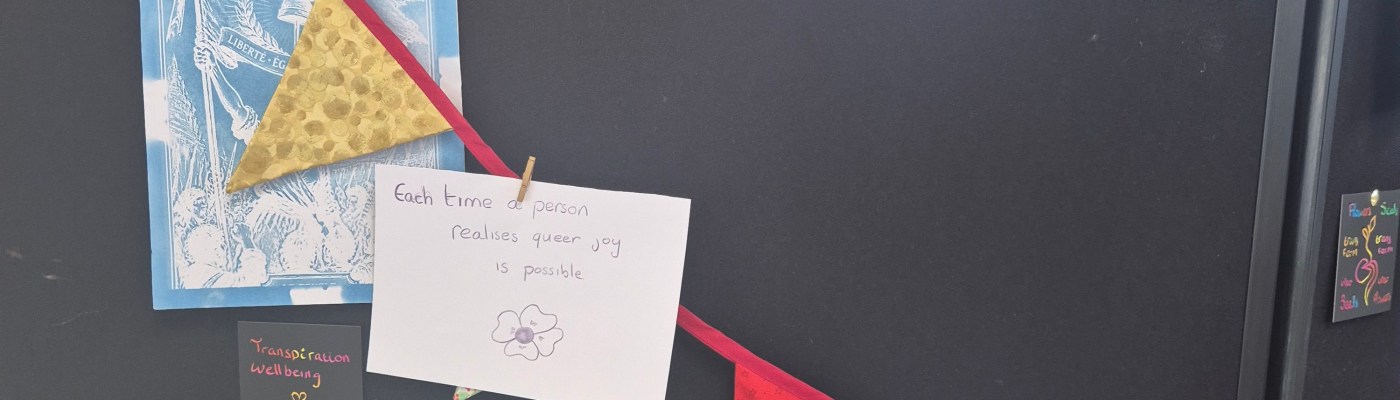
One of the highlights of my time at the conference was hosting the Moments of Hope project—specifically curating the Wall of Hope installation. Designed as an evolving, collective tapestry, the installation invited delegates—both in Preston and participating virtually—to share and display their own fragments of queer and trans joy, survival, solidarity, and light.
In therapy and social justice spaces, we rightly spend time confronting systemic oppression, trauma, and institutional harm. However, focusing solely on harm risks reducing marginalized lives to suffering. The Wall of Hope offers a counter-narrative. It reminds us that hope is not a passive sentiment or forced optimism; it is an active, disciplined practice of survival. When we make space to witness each other’s joy and quiet resilience, we fortify the ground we stand on.
Holding Space as an Online Host
Serving as an online host underscored how vital accessible, hybrid spaces are for our community. Creating a warm, inclusive environment across a screen requires deliberate intentionality—ensuring that virtual delegates aren’t merely passive observers, but fully integrated members of the conference body.
From facilitating live reflections to bridging the virtual chat with the physical lecture halls, hosting highlighted the profound power of virtual community. For many practitioners isolated geographically or navigating personal energy limits, online connection is not a compromise—it is a lifeline.
Alongside the installation, I facilitated the Moments of Hope Workshop, focusing on a truth that practitioners often struggle to face: as therapists, we frequently overlook restorative practices in our own lives.
When working with clients navigating trauma, minority stress, and societal hostility, therapists can easily slide into productivity-driven models of care. We push through burnout, treat self-care as an administrative checklist item, and internalize the capitalist demand to continuously produce and absorb distress. During the workshop, we explored how restoring ourselves is an ethical and political necessity, not an indulgence:
- Unlearning Institutional Productivity: Challenging the pressure to measure clinical efficacy by output or endurance.
- Hope as an Antidote to Despair: Recognizing that despair thrives in isolation, while hope requires community nourishment.
- Collective Rest: Shifting away from individualized “self-care” toward structural, community-held spaces where we can drop our armor and rest together.
Rest restorative practice isn’t secondary to therapeutic work—it is the foundation that makes sustainable, anti-oppressive practice possible.
Community in Dark Times
If the Pink Therapy Conference made one thing clear, it is that we cannot sustain this work alone. Hope is not something we generate in a vacuum; it is built together, conversation by conversation, card by card, and moment by moment.
In dark and uncertain times, finding sanctuary within a community that understands the stakes of our work provides the light needed to keep walking forward.
“In the end the Shadow was only a small and passing thing: there was light and high beauty for ever beyond its reach.”
— J.R.R. Tolkien, The Return of the King

 Counselling in Northumberland